
Perimenopause & Sexual Health
If you’re a cisgender woman in your 40s or older, you may have noticed shifts in your sexual desire or pleasure that could be attributed to hormonal changes.
Menopause is a vast and layered experience that affects hormones, emotions, and physical changes. Officially, menopause actually only lasts 1 day: the day marking 12 months after your last period. However, as you might already know, the changes that occur can affect your life for over a decade. This means menopause is an important milestone to acknowledge.
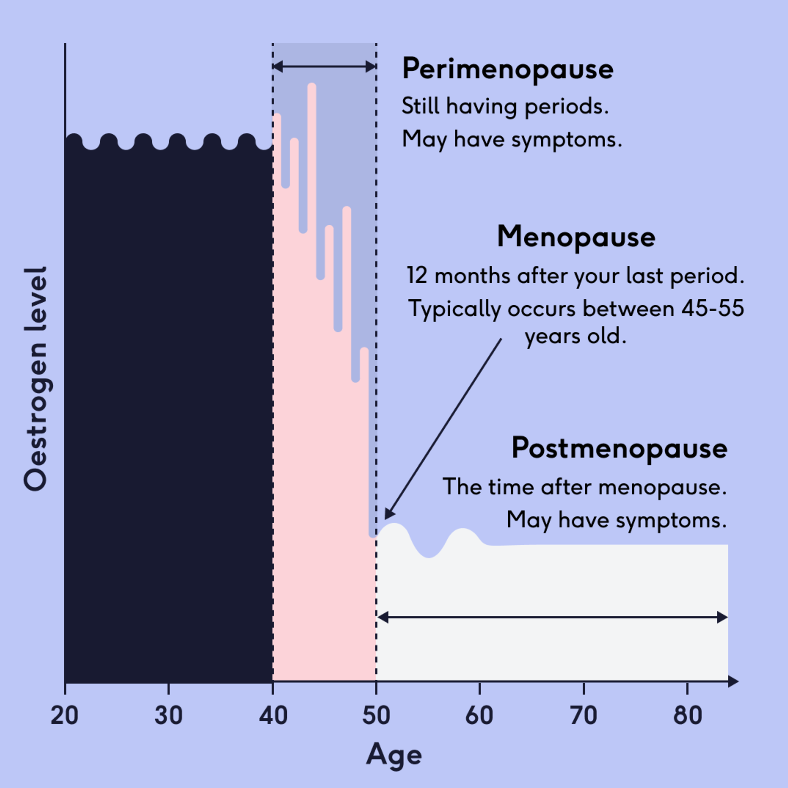
Perimenopause is the transitional stage during which you still have periods, but you may also have symptoms such as hot flashes, insomnia, brain fog, fatigue, a low mood, anxiety, irritability, vaginal dryness, and a lower libido.
This graph from The Lowdown shows us how estrogen fluctuates with age.
The reason you may experience some of these symptoms is that your estrogen and progesterone levels are dropping. Your ovaries have fewer and fewer eggs, and your body is working overtime to release the eggs, causing friction with your hormones.
Though perimenopause and postmenopause are different for each woman, we are all experiencing changes in what feels normal for us. This can feel especially confusing when we are not aware that our hormone levels are the cause. Your body is likely asking for new forms of care. This is a good time to meet with your gynecologist to discuss any changes in your sexual healthcare.
If you want to learn more about perimenopause and postmenopause, explore educational resources from the non-profit let’s talk menopause!

As hormones continue to change, some women notice higher sexual desire than they typically have had, as the ovaries produce testosterone for several years after they stop producing estrogen and progesterone. Several years into postmenopause many women notice a reduction in their sexual desire. Commonly instead of spontaneous desire, women might experience sexual desire in response to closeness and arousal.
Making Sex Better as We Age
During sexual experiences, sensations may be more or less intense than what you have experienced in the past. If genital stimulation feels uncomfortable, rather than rushing through sex to get past the pain, I recommend slowing down, adding a healthy lubricant, and giving your body more time to increase blood flow. As we get older, quickies may not feel as good as they did in younger years. Our bodies need more time to become aroused enough for external stimulation or penetration to feel pleasurable. We also need more time in pleasure to reach climax.
I encourage individuals and couples to consider this phase to be an opportunity for enhancing your sexual experiences by listening to your bodies and choosing the pace and the activities that feel good rather than repeating what you may have chosen in years past.
